Opera is still being sold as classical music’s most lavish spectacle - a world of large voices, rich orchestras, and famous tunes. It is extolled as an elevated musical experience: symphonic gold dust, gilded with who’s who in the foyer. For many people, the old-world glamour is a turn-off; reinforcing the anti-opera, elite-prejudice tropes.
By treating opera as a ‘sophisticated’ branch of music, rather than a form of theatre and storytelling, we may have misrepresented its nature, and misdirected its audience. Opera’s power has never been its sound alone. The art form’s emotional core lies in words - their rhythm, precision, and capacity to hurt, heal, and reveal.
Research on lyrics and emotion suggests that opera’s power lies precisely in what some music-lovers seek to avoid: the direct, named, narrative emotion that comes with word. Opera closer to theatre than symphony: driven by character, situations and language made extreme - speech pushed to the limit of human sound. When composers set words to music, they don’t decorate. They taste, test, stretch; make it dangerous. The music exists to enrich and expose what lies beneath the words, not to replace or obscure them.
In opera, words can give music its edge, fixing meaning and provoking emotions. A melody can move and suggest, but a line of text tells us why this particular betrayal, this hunger, this ecstasy, this loss. Opera magnifies these moments by joining language and sound until neither can exist without the other. It is not music plus story, but a collision of both, generating emotion that feels too large to contain.
The convention of singing in foreign languages may have carried prestige and made international exchange easier, but it has also come at a cost. Reading sur-titles disconnects the audience from the stage. When comprehension or concentration slips, reactions are out of sync, and empathy recedes. The result is an experience absorbed through the mind before it reaches the heart. Opera’s emotional clarity depends on linguistic clarity; when that is obscured its deep impact falters, no matter how impressive the music, or how astounding the voice.
Opera’s enduring gift is communal vulnerability - and starts with a willingness to feel. In recent years, after the disruptions of pandemic and political tension, audiences have sought familiarity and comfort. Companies have relied on well-travelled repertoire and nostalgia for box-office security. Attendance post-pandemic is still faltering. The problem is not that people dislike opera; the majority of our population don’t know anything about it. New generations will listen to anything - genre is blurred, if not irrelevant, in the soundtrack to their lives. Courting music-lovers seeking beauty and comfort is pointless, with open and inexpensive digital access to music of all kinds, anytime, anywhere. Opera’s deepest connection lies with story-lovers seeking truth, and people seeking live, human interaction.
Those drawn to difficult words and complex narratives - readers, theatre-goers, writers festival-goers, podcast listeners - are opera’s natural allies. They already crave the kind of meaning that music alone cannot provide. To reach them, opera must reclaim its identity as verbal theatre. The music speaks to questions embedded in each work: the moral sacrifices, the conflicts of power and love, the choices that undo us. Librettists, playwrights and translators are not support staff; they are central collaborators in reawakening opera’s emotional precision.
Opera is, and always has been, an art form of confrontation. It shouldn’t encourage background listening or polite distance. The combination of music and language, voices and relationships, makes feeling unavoidable. In an age of the seeking of distraction and comfort, opera’s insistence on intensity may be exactly what our cultural life needs.
Opera’s future will not be secured by turning up the volume on spectacle and scale, but by claiming (and supporting…) its full identity as an art form where music serves the drama of thought and feeling.
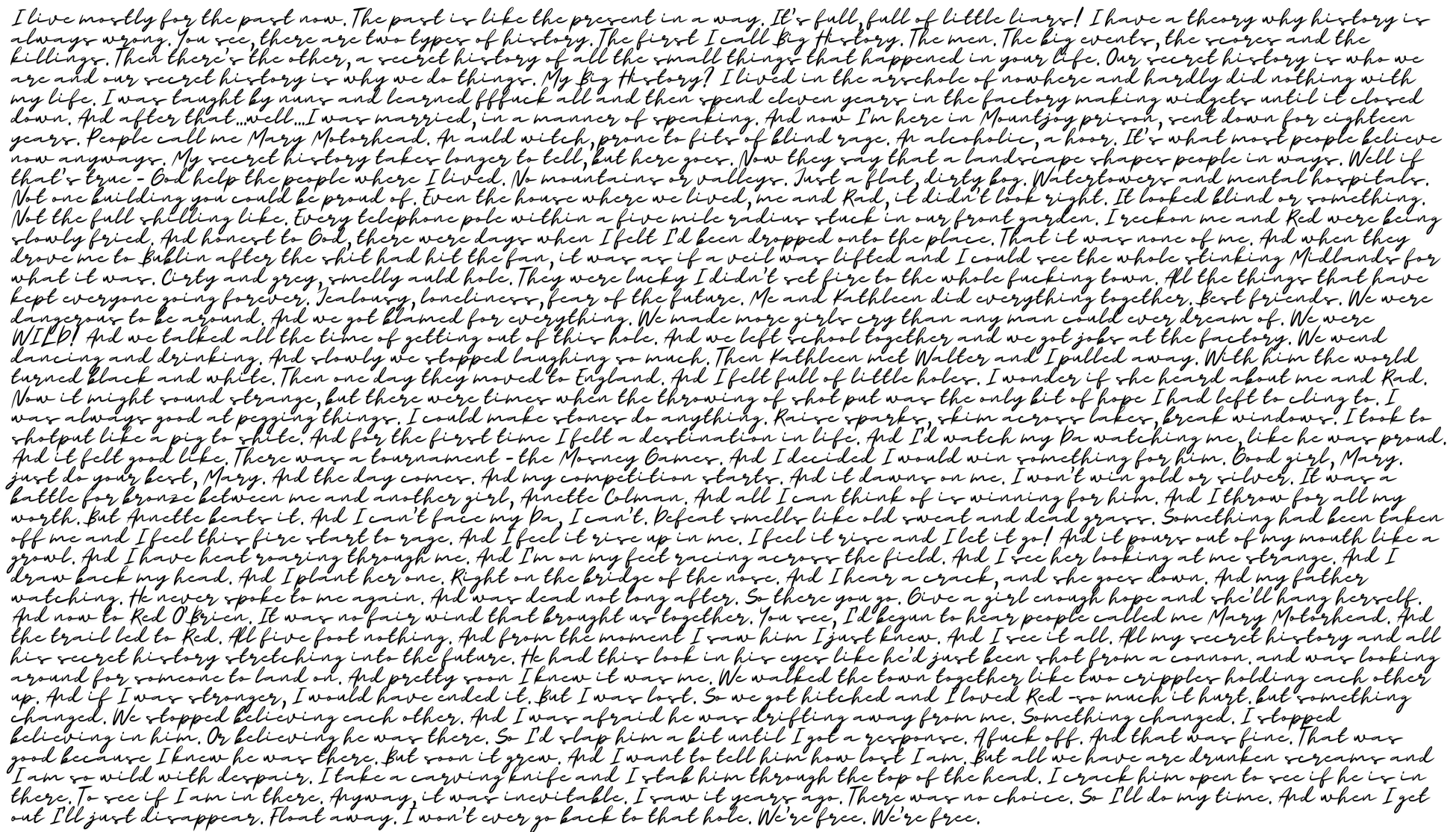
Text above: Mary Motorhead by Emma O’Halloran and Mark O’Halloran.
Australian Premiere: March 6-13, 2026 at Malthouse Theatre, Southbank, Victoria. Australia